Wondering ‘what is a nutrunner’ and why it matters in manufacturing? A nutrunner is a specialised tool that tightens or loosens fasteners with precise torque control, ensuring consistent, safe and efficient assembly. This guide explains what a nutrunner is, the main types, how they work and where they’re indispensable.
The Importance of Nutrunners in Manufacturing
If you’re asking “what is a nutrunner” in practical terms, think accuracy and repeatability. One loose or overtightened bolt can trigger failures, safety risks or recalls—nutrunners deliver the specified torque to avoid those outcomes. Nutrunners address these challenges by delivering a specific torque output, preventing under- or over-fastening. Used in automotive, aerospace, and general manufacturing, these tools are designed for high-volume environments where quality, speed, and reliability are non-negotiable.
By enabling assembly technicians to maintain consistent torque, nutrunners help extend product lifespan, reduce warranty claims, and optimise production flow. Their precision also supports compliance with industry standards, making them a key asset in settings where uniformity and safety are paramount.
Types of Nutrunners
Still wondering what is a nutrunner best suited for your line? Nutrunners come in pneumatic, electric and battery formats—each tailored to different torque ranges, control needs and portability requirements.
1. Pneumatic Nutrunners
- Power Source: Compressed air
- Advantages: Lightweight, high power-to-weight ratio, suitable for fast-paced assembly lines where portability and speed matter.
- Typical Applications: Automotive assembly, general manufacturing, and repair shops where compressed air is readily available.
Pneumatic nutrunners are often favoured for their simplicity, reliability, and ease of maintenance. However, they may require additional infrastructure (like air compressors) and can be noisier than other types.
2. Electric Nutrunners
- Power Source: Electricity (corded or battery-powered)
- Advantages: Quieter operation, easy torque programming, and reduced energy consumption compared to air-powered systems.
- Typical Applications: Electronics assembly, aerospace, and any setting where precise torque control and data logging are essential.
Electric nutrunners frequently come with digital controls, making it simple to program specific torque settings. They also generate less noise, which can improve workplace ergonomics.
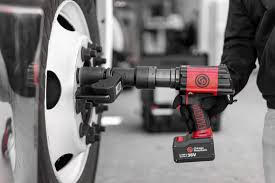
3. Battery Nutrunners
- Power Source: 18 volt batteries
- Advantages: Extremely high torque output, ideal for large-scale or heavy-duty applications.
- Typical Applications: Heavy machinery assembly, construction equipment manufacturing, and offshore rigs.
Battery nutrunners excel when dealing with very large fasteners with high torque where portability is required.
How Nutrunners Work: The Torque Application Mechanism
Regardless of the type—pneumatic, electric, or battery—all nutrunners follow the same fundamental principle: applying torque to a fastener in a controlled manner. Here’s a simplified overview of their operation:
- Torque Generation
- The tool’s motor (air, electric, or hydraulic) drives an internal mechanism that converts energy into rotational force.
- Gear Reduction
- A system of gears ensures the torque output matches the user-defined requirement, preventing overtightening.
- Clutch or Control System
- Nutrunners often include a clutch, a stall motor -or electronic control that disengages or signals once the desired torque is reached, ensuring consistent fastening.
- Data Feedback (In Advanced Models)
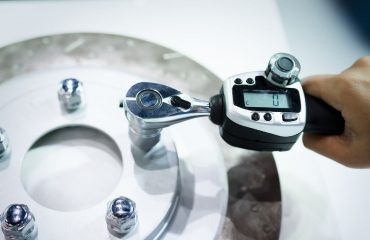
- Some electric & battery nutrunners offer real-time feedback, logging torque data for quality assurance and traceability.
By automating torque control, nutrunners reduce human error and the physical strain associated with manual tightening, leading to higher productivity and more reliable assemblies.
Common Uses for Nutrunners
Nutrunners are essential in a variety of industrial sectors:
- Automotive
- From engine assembly to chassis construction, precise torque control is crucial to prevent mechanical failures and ensure vehicle safety.
- Aerospace
- Aircraft components require rigorous standards for safety and performance. Nutrunners enable accurate fastening of critical parts like wings, fuselage panels, and engine components.
- Industrial Manufacturing
- Assembly lines for appliances, machinery, and consumer goods rely on nutrunners to maintain uniform torque across thousands of fasteners, minimising production defects.
- Maintenance and Repair
- Beyond initial assembly, nutrunners are also used in maintenance tasks—such as tightening flanges on pipelines or replacing large bolts on industrial equipment—to ensure they meet prescribed torque specifications.
What is a nutrunner? In essence, it’s a specialised tool engineered for precise torque control in fastening operations, vital for industries where consistent and reliable assembly is paramount. Whether you opt for a pneumatic, electric, or hydraulic model, the right nutrunner can optimise production speed, reduce errors, and enhance overall product quality.
By automating the torque application mechanism, nutrunners minimise the risk of over- or under-tightening, extending the lifespan of equipment and boosting workplace safety. In short, they are indispensable for any manufacturing or assembly environment striving for efficiency, accuracy, and compliance with industry standards.